
Scaling innovation
Reaching more people together
Everyday hand function
Greater independence starts with the hand

When purposeful hand movement is lost, everyday activities become a challenge. Our starting point is the desire to grasp, hold and release objects independently again.
GRASPAGAIN combines residual muscle signal recording with a powered hand orthosis. The system is being developed for people with neurological or neuromuscular impairments of hand function.
Our goal is a wearable assistive device for everyday life. Individual suitability and practical use are being investigated in our research.
Explore the product and technologyPotential
Estimated user potential
Our model expressed in people. Global potential, the addressable population in Germany and our care delivery target for 2031.
- Worldwide TAM
- 4 millionPeople per yearRounded estimate
- Germany SAM
- 12,500Potential users per yearRounded estimate
- Germany SOM
- 2,000People to serve in 2031Target market penetration of 15%
The figures are based on our estimates and assumptions about people who could directly benefit from GRASPAGAIN. These include sufficient arm mobility and usable muscle signals. Only people following a stroke or with a spinal cord injury are included.
Our foundation
Our foundation
Research, practical testing and public funding form the foundation for further development.
Scientific foundation
Originating at the n-squared lab at FAU Erlangen-Nürnberg. The underlying research is documented in scientific publications.
Testing with participants
Studies of muscle signals and neuroorthosis use inform further development. Our science page presents the current status.
Funded research transfer
EXIST research transfer funding and the Medical Valley Award support the path from research towards the planned spin-off.
Intellectual property
Patent applications for GRASPAGAIN
Two technical innovations combine ease of use with control derived from the body’s own signals.

Mechatronics
Quick to connect. Easy to put on
Our coupling unit makes the connection between the drive and orthosis detachable. The innovation addresses a practical everyday need: putting on and taking off the entire system quickly.
Patent applications filed in Europe and the USA.
EP24152836.3 · US20250236493A1

Neural interface
Turning biosignals into movement
Biosensors capture the electrical signals of the muscles. Artificial intelligence translates them into control commands for the orthosis. Our neural interface connects the user’s movement intention with the motorised assistance of GRASPAGAIN.
Patent applications filed in Europe and the USA.
EP24168372.1 · Publication EP4628054A1Care pathway
Our planned route to market
Development initially focuses on Germany. We aim to reach patients through collaboration with clinical and orthopaedic technology partners.
Develop the system
Align sensing, control and orthosis development with the requirements of practical use.
Engage partners
Bring clinical experience and orthopaedic technology expertise into testing and fitting.
Prepare provision
Develop the prerequisites for manufacturing, fitting, support and access to provision.
We discuss the business model, financing requirements and next development steps in investor meetings.
Development
Our path towards a spin-off and practical use
This overview distinguishes our existing foundation, ongoing work and planned next steps.
Foundation
Research at FAU
Scientific work on muscle and nerve signals forms the starting point of the project.
Ongoing
Development and testing for 5 pilot customers
We already have five pilot customers for whom we are developing and testing the orthosis. Their requirements and experiences directly inform further development.
In preparation
The b2m labs spin-off
We are preparing the transfer from the university into an independent company structure.
Planned
Preparing market entry and reimbursement
We have already discussed reimbursement options with health insurers and received positive feedback. This informs our preparations for market entry. Further validation, regulatory steps and establishing care delivery are the next tasks.
Preparing the company leadership
Dominik Braun
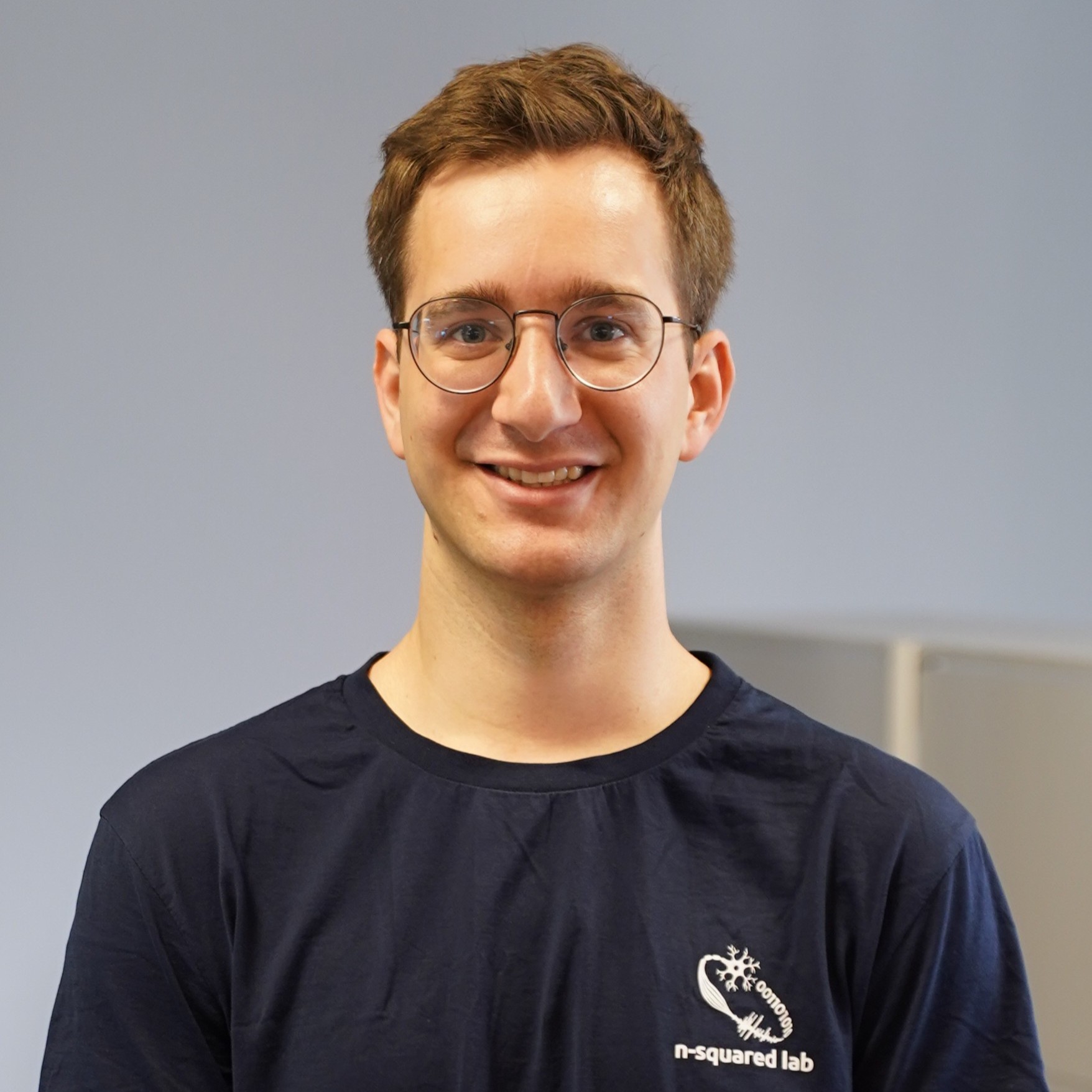
Project Lead
He is responsible for corporate strategy and the development of biosensor technology and neural interfaces. He is currently pursuing a PhD in neuroengineering at FAU Erlangen-Nürnberg. At GRASPAGAIN, he is pursuing his passion for helping people regain their grip following paralysis. This is a goal he set himself even before he began his studies in medical technology.
Request investor deckPreparing the company leadership
Jonas Walter
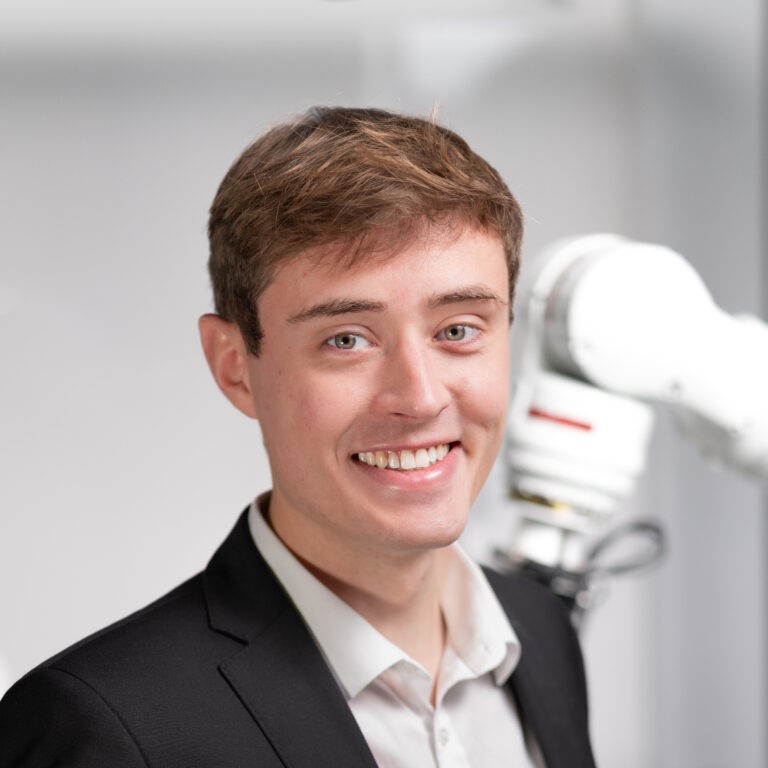
Technical Lead
He is responsible for corporate strategy, with a particular focus on technology and the development of unique selling propositions. He is currently pursuing a PhD in mechatronics and previously headed the Medical Technology Research Group at the Chair of Factory Automation and Production Systems at FAU Erlangen-Nürnberg. His interest in assistive robotics led him to study mechatronics and now drives our neuroorthoses.
Request investor deckFAQ
Investor questions
We are currently finalising the GRASPAGAIN product prototype and addressing the regulatory steps. In parallel, we are validating our business model and preparing the b2m labs spin-off.
We discuss the technology, development status, business model, financing requirements and next milestones. You can request the investor deck through the contact form.
Our science page brings together study progress, publications and funding. We welcome direct discussions of further questions.
The university does not wish to hold equity in the company. We have already discussed the transfer of intellectual property with the university.
Your next step
Let’s discuss the next steps
Would you like to learn more about the development of GRASPAGAIN? Request our investor deck and start a conversation.